

Your cat needs to move, pounce, and chase to stay healthy and happy. The best cat toys that encourage exercise and play are the ones that mimic hunting behaviors and keep your feline friend mentally sharp.
We'll walk you through the top toy types, why they work, and how to use them to get your cat moving more every single day.
In this article
- Why Exercise Toys Matter for Your Cat
- Interactive Wand Toys for Active Play
- Puzzle Toys and Treat Dispensers
- Chasing Toys That Tap Into Hunting Instincts
- DIY and Low-Cost Exercise Options
- Building a Toy Rotation System
- Safety and Durability Matter
- How Often Should You Play With Your Cat?
- Combining Toys for Maximum Engagement
- Signs Your Cat Is Getting Enough Exercise
Why Exercise Toys Matter for Your Cat
Indoor cats can get lazy fast. Without the right toys, they'll spend most of their day napping and might gain weight or develop behavioral issues from boredom.
Exercise toys solve this. They trigger your cat's natural instincts to chase, pounce, and climb, which keeps their body active and their mind engaged. A cat that plays regularly is a cat that sleeps better, stays at a healthy weight, and causes fewer household problems.
Interactive Wand Toys for Active Play
Wand toys are the gold standard for getting your cat to move. They're simple: a stick with feathers, strings, or fabric attached. You move it around, and your cat chases it like prey.
The beauty is that you control the action. Dangle it low, whip it fast, let it skitter across the floor. Your cat will spring after it, leap into the air, and practice hunting skills for as long as you play.
Look for options like the 2 Wands with Base & 6 Feather Interactive Cat Toy Set, which gives you multiple wands so you can rotate them and keep playtime fresh. Having extras means you always have a toy ready, and your cat stays interested because each one feels new.
Play for 10-15 minutes, a few times a day. You'll see your cat panting and happy after a good wand session.
Puzzle Toys and Treat Dispensers
Puzzle toys combine mental work with physical effort. Your cat has to figure out how to get the treat out, which means they're thinking, batting, and pawing at the toy constantly.
These toys keep your cat occupied even when you're not playing. Fill them with treats or kibble and watch your cat stay engaged for hours. The rewards feel earned, and your cat gets the satisfaction of solving a problem.
The Interactive Puzzle Ball is a great example. Load it up and your cat will roll it, push it, and chase it to release the rewards inside. It's exercise and mental stimulation wrapped into one.
Treat-dispensing toys work best when you use them during times when your cat might otherwise get bored, like afternoons when you're busy or evenings when energy is low.
Chasing Toys That Tap Into Hunting Instincts
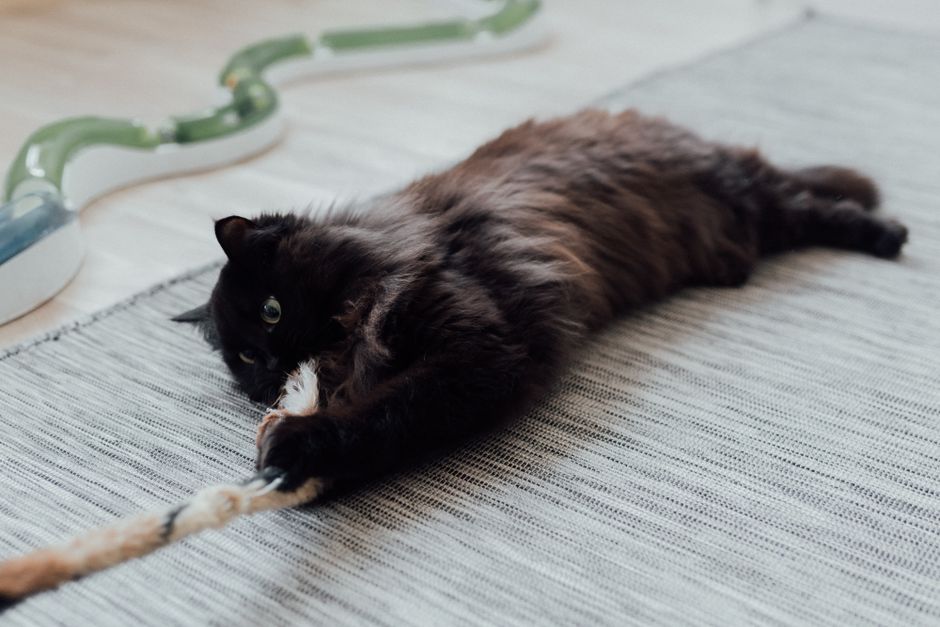
Cats are hunters. They want to stalk, chase, and catch things. Toys that move unpredictably and make noise are perfect for this.
Small balls, toy mice, and jingly balls work well because they roll, bounce, and move in ways your cat can't predict. Toss them and your cat will chase, pounce, and carry them around. Some cats will even play fetch if the toy is right.
The key is variety. Buy several small chasing toys and rotate them every few days. When your cat hasn't seen a toy in a week, it feels brand new all over again. This keeps the excitement going and prevents boredom.
DIY and Low-Cost Exercise Options
You don't need fancy toys for every play session. Some of the best exercise toys cost nothing.
Cardboard boxes are amazing. Your cat can jump in, hide, and pounce on anything that moves nearby. Large paper bags work the same way. The crinkly sound keeps your cat interested, and they'll chase anything that rustles inside.
Crumpled paper balls, ping pong balls, and even a string tied to a doorknob give your cat something to chase and bat around. These options are free and often more entertaining than expensive toys.
The downside is they wear out fast or get shredded. So use them as supplements to real toys, not replacements.
Building a Toy Rotation System
Your cat will get bored if the same toys are always out. Rotating toys keeps playtime exciting and extends the life of each toy.
Here's how to do it:
- Buy or gather 8-12 different toys
- Keep 2-3 out at a time
- Swap them every 3-5 days
- Bring back favorites after a week or two away
This system works because novelty drives play. When you rotate, every toy feels fresh and exciting. Your cat will play more and you'll get better exercise results.
Store rotated toys in a closet or bin so they're out of sight. This makes the reappearance feel surprising and new.
Safety and Durability Matter

Not all toys are created equal. Some shed materials, have loose strings, or break easily into small pieces that your cat could swallow.
When you're choosing toys, look for sturdy construction, secure stitching, and non-toxic materials. Avoid toys with small bells or beads that could come loose.
Check toys regularly for wear and tear. A fraying wand toy or a puzzle toy with cracked plastic isn't just boring, it's also a potential hazard. Replace damaged toys before they become a problem.
Quality toys last longer, stay engaging longer, and keep your cat safer. PetsAgree carries durable toys from trusted manufacturers that are designed to withstand active play.
How Often Should You Play With Your Cat?
Active play should happen at least twice a day, ideally in the morning and evening when cats are naturally more energetic.
Each session can be 10-20 minutes. You don't need long stretches. Multiple short bursts of activity throughout the day are actually better than one long play session.
Pay attention to your cat's energy level. If they're panting or moving slowly, take a break. If they're still interested, keep going. Every cat is different, so adjust based on what you see.
Combining Toys for Maximum Engagement
The best results come from mixing toy types in one play session.
Start with a wand toy to get your cat moving and excited. Then switch to a chasing toy like a small ball to keep the momentum going. Finish with a puzzle toy or treat dispenser so your cat has something to work on independently after you're done playing together.
This combination keeps your cat's interest high and gives them different kinds of physical and mental stimulation. It also prevents frustration because they're not doing the exact same motion over and over.
Signs Your Cat Is Getting Enough Exercise
A well-exercised cat shows clear signs. They're playful but not hyperactive. They sleep deeply and peacefully. They're calm during the day and don't knock things off shelves out of boredom.
If your cat is constantly meowing for attention, zooming around at 3 a.m., or seeming lethargic and disinterested, playtime might be the answer. More movement with the right toys can fix these behaviors quickly.
Keep a simple log if you want. Note how much you played each day and how your cat's behavior changes. You'll spot patterns and know exactly how much exercise your cat needs to stay happy and healthy.
People Also Ask
What's the best time of day to play with my cat?
Cats are naturally more active in the early morning and evening, so those are ideal times. A quick 10-15 minute session before breakfast and another before dinner aligns with your cat's natural energy cycles and gives them the movement they crave.
Can I use the same toy every day?
You can, but your cat will get bored faster. Mixing up toys keeps play exciting. Rotate different toys throughout the week so each one stays fresh and interesting when your cat encounters it again.
Do older cats need exercise toys too?
Yes, but adjust intensity. Older cats appreciate gentler play with toys that don't require explosive jumping or running. Puzzle toys and slower wand play work well. Always watch for signs of fatigue and let your senior cat set the pace.
What if my cat ignores the toys I buy?
Some cats are picky. Try different textures, sounds, and movement styles. A toy that doesn't interest your cat today might click next week when you bring it back out. If a toy never works, donate it and try something different. Every cat has preferences, and that's okay.