

In this article
- How to Groom a Long Haired Cat: The Basics
- Choose the Right Grooming Tools
- Start with the Top Layer
- Work Through Mats and Tangles Carefully
- Thin Out Your Cat's Coat if Needed
- Don't Forget Sanitary Grooming
- Schedule Professional Grooming Every 4 to 8 Weeks
- Keep Up with Weekly Brushing
- Use Positive Reinforcement During Grooming
- Common Grooming Mistakes to Avoid
- When to Call in a Professional Groomer
- FAQs About Grooming Long-Haired Cats
How to Groom a Long Haired Cat: The Basics
Grooming a long-haired cat is one of the best things you can do for their health and comfort. A regular grooming routine keeps their coat soft, prevents painful mats and tangles, and helps you catch any skin issues early. The good news is that you don't need to be a professional to do this right at home.
The key is brushing regularly, using the right tools, and being gentle with your cat. Most long-haired cats need brushing at least once or twice a week to stay in top shape. If you're just starting out, don't worry—this guide will walk you through everything.
Related: Pet Massage Comb Benefits for Shedding: Complete Guide
Related: Best Orthopedic Bed for Senior Dogs: Complete Buyer's Guide
Choose the Right Grooming Tools
Before you start, you'll need the right equipment. The best tools for long-haired cats are metal combs and slicker brushes because they work through thick, fluffy coats without pulling too hard.
A metal comb with wide teeth is especially useful when you're dealing with mats or knots. Start with the wide-toothed comb to gently untangle problem areas before moving to a finer comb. This two-step approach prevents you from yanking out fur or hurting your cat. If you're looking for quality grooming brushes designed specifically for cats with longer coats, PetsAgree carries several options to make the job easier.
Start with the Top Layer
When you first brush your cat, focus on just the top layer of fur. This might seem counterintuitive, but it's actually the smartest move. Brushing only the surface prevents you from tugging on matted fur underneath, which can be uncomfortable and cause your cat to resist grooming sessions.
Hold the brush at a gentle angle and make long, smooth strokes. Watch your cat's body language—if they start to pull away or seem uncomfortable, take a break. Building positive associations with grooming is more important than getting it perfect the first time.
Work Through Mats and Tangles Carefully
If your cat has mats, don't panic. Start by using your wide-toothed comb to gently work at the edge of the mat. Hold the fur with two fingers at the base of the mat and slowly comb through the tangled section. This prevents you from pulling the skin underneath.
For stubborn tangles, work in small sections. Patience is everything here. If a mat is too tight or close to the skin, it's better to stop and consider professional grooming rather than risk hurting your cat or cutting their skin.
Thin Out Your Cat's Coat if Needed
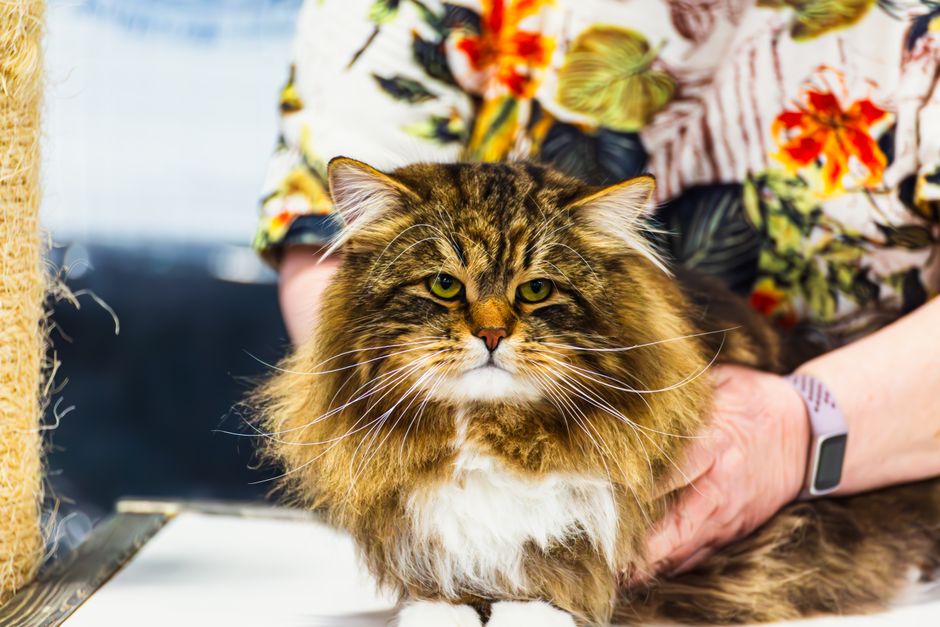
Long-haired cats can get thick, heavy coats that trap heat and collect debris. Thinning the coat makes your cat more comfortable, especially in warmer months. To thin the coat safely, hold a section of fur with two fingers and snip into it at a slight angle using grooming scissors. Never cut parallel to the skin.
The goal is to reduce thickness and length without creating bald patches. Work slowly and only remove a little bit at a time. If you're unsure about this step, professional groomers can do it for you.
Don't Forget Sanitary Grooming
Trimming the hair around your cat's rear end and private areas is an important part of grooming that many cat owners skip. This is called sanitary grooming, and it keeps your cat cleaner and prevents hygiene issues.
Carefully trim any long hair in these sensitive areas. If you're nervous about doing this yourself, it's a standard service that professional groomers handle regularly.
Schedule Professional Grooming Every 4 to 8 Weeks
Even if you're brushing at home, professional grooming every 4 to 8 weeks can make a huge difference. A groomer has specialized tools and experience to handle mats you might miss, thin the coat evenly, and perform sanitary trimming safely.
The best part is that regular professional grooming actually reduces how much you need to brush at home. Your groomer can also spot skin problems or other health concerns early. If you'd like help finding quality grooming supplies to maintain your cat's coat between appointments, check out PetsAgree's full range of grooming tools.
Keep Up with Weekly Brushing
Even after professional grooming, a quick weekly brushing keeps your cat's coat in great shape and prevents new mats from forming. Spend just 10 to 15 minutes running a comb or brush through your cat's fur. This is also a nice bonding moment with your pet.
Regular brushing means fewer surprises between professional appointments and a healthier, happier cat overall.
Use Positive Reinforcement During Grooming

Your cat is more likely to cooperate during grooming if they associate it with good things. Offer praise and treats during and after brushing sessions. Keep sessions short, especially when your cat is first getting used to grooming.
If your cat gets anxious or uncomfortable, take a break and try again later. Never force your cat to sit through a long grooming session. Building patience and trust is way more important than getting the perfect groom every single time.
Common Grooming Mistakes to Avoid
Don't brush a dry coat without conditioning spray—this causes breakage and discomfort. Don't use human hair brushes or combs; they don't work well on cat fur and can damage the coat.
Avoid brushing too hard or pulling on mats. If your cat seems stressed, stop and try again later. And don't wait until your cat has serious mats before grooming—prevention is always easier than dealing with a matted coat.
When to Call in a Professional Groomer
If your cat has severe mats, has never been groomed before, or simply won't cooperate at home, a professional is your best option. Groomers have the tools and gentle touch to handle difficult situations safely. There's no shame in getting help—it's actually the kindest thing you can do for your cat.
Professional grooming also saves you time and stress, especially if you have a long-haired cat that requires frequent maintenance. When you're ready to invest in grooming tools for maintenance at home, PetsAgree stocks everything you need to keep your long-haired cat comfortable and looking great.
FAQs About Grooming Long-Haired Cats
How often should I brush my long-haired cat?
Aim for at least once or twice a week. If your cat is prone to mats or has an especially thick coat, brush two or three times a week. Regular brushing prevents mats, reduces shedding, and keeps your cat's coat healthy.
Related: Best Dog Brush for Shedding Long Hair 2026: Top 5 Ranked
Related: How Often Should You Brush Your Cat: A Smart Guide
Can I bathe my long-haired cat before grooming?
Yes, but it's optional. A light misting with water or conditioning spray can actually make brushing easier by softening the coat. Some cat owners prefer to groom first and bathe later. Do whatever works best for your cat's comfort level.
What if my cat hates being groomed?
Start with short sessions, keep treats nearby, and go slowly. Most cats warm up to grooming with patience and positive rewards. If your cat is extremely resistant, a professional groomer may have better techniques or tools to make the experience less stressful.
Do I really need professional grooming if I brush at home?
Professional grooming isn't absolutely necessary, but it helps. A groomer can thin your cat's coat evenly, handle mats safely, and provide sanitary trimming. Even one or two appointments a year can make a big difference in your cat's comfort and your grooming routine at home.